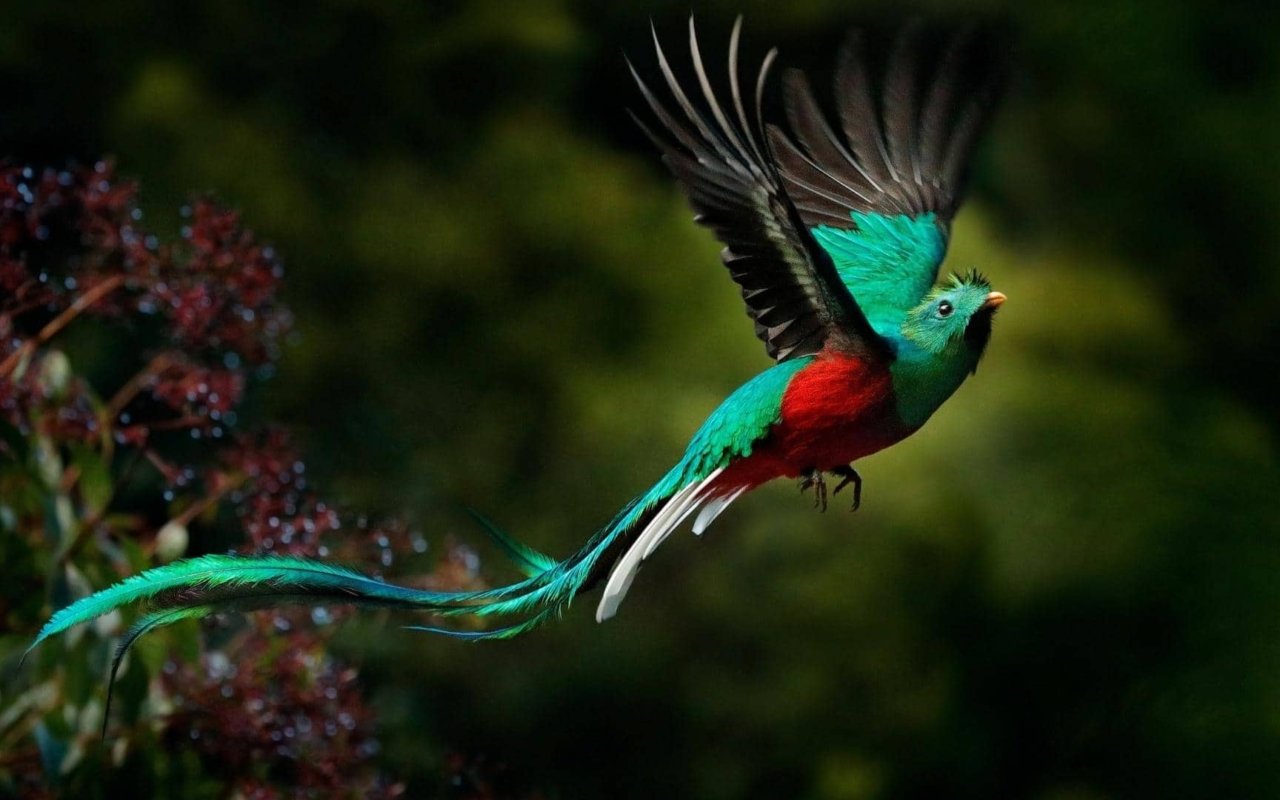
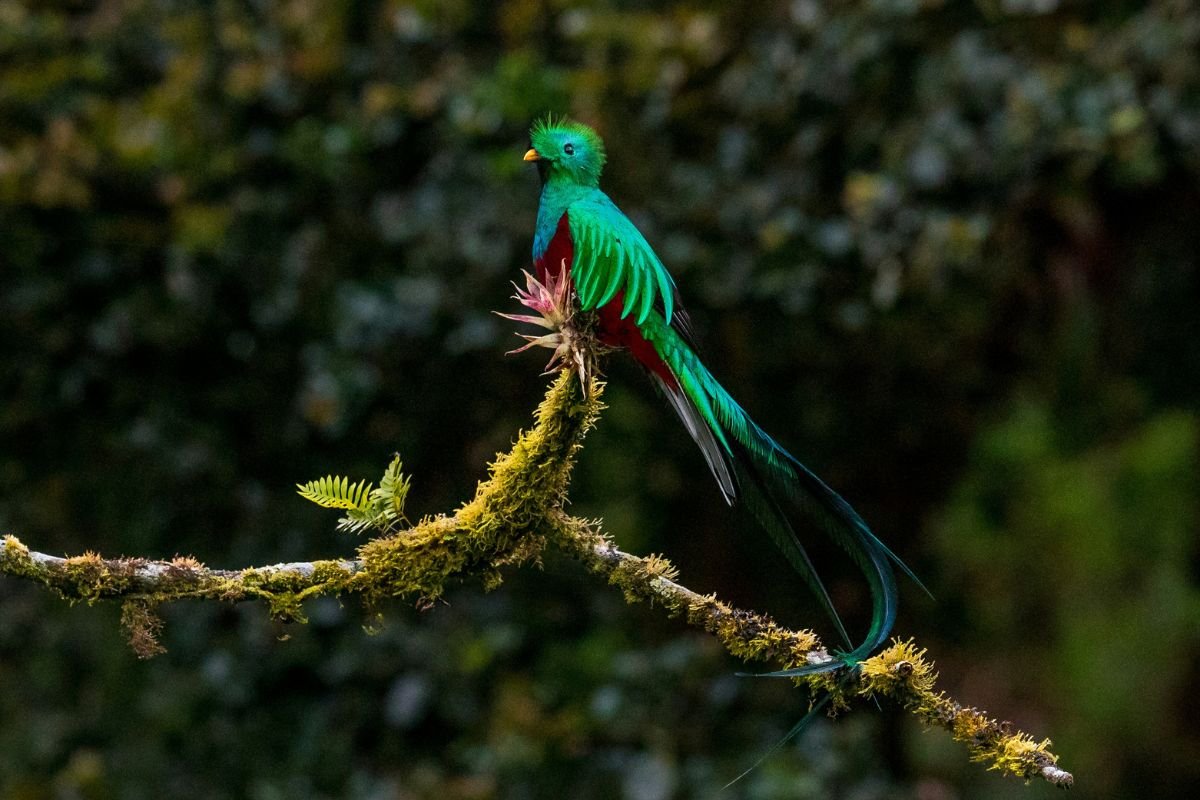
With emerald-green plumage, a bright red breast and a long tail that undulates in the air like a ribbon, this is the resplendent quetzal. Once revered by pre-Columbian civilizations, today it continues to fascinate all who cross its path. And while Costa Rica is often cited as an observation territory, Panama, its less-frequented neighbor, offers ideal conditions for following in its footsteps.
The Quetzal, a mythical bird of the high forests
Where does the quetzal live?
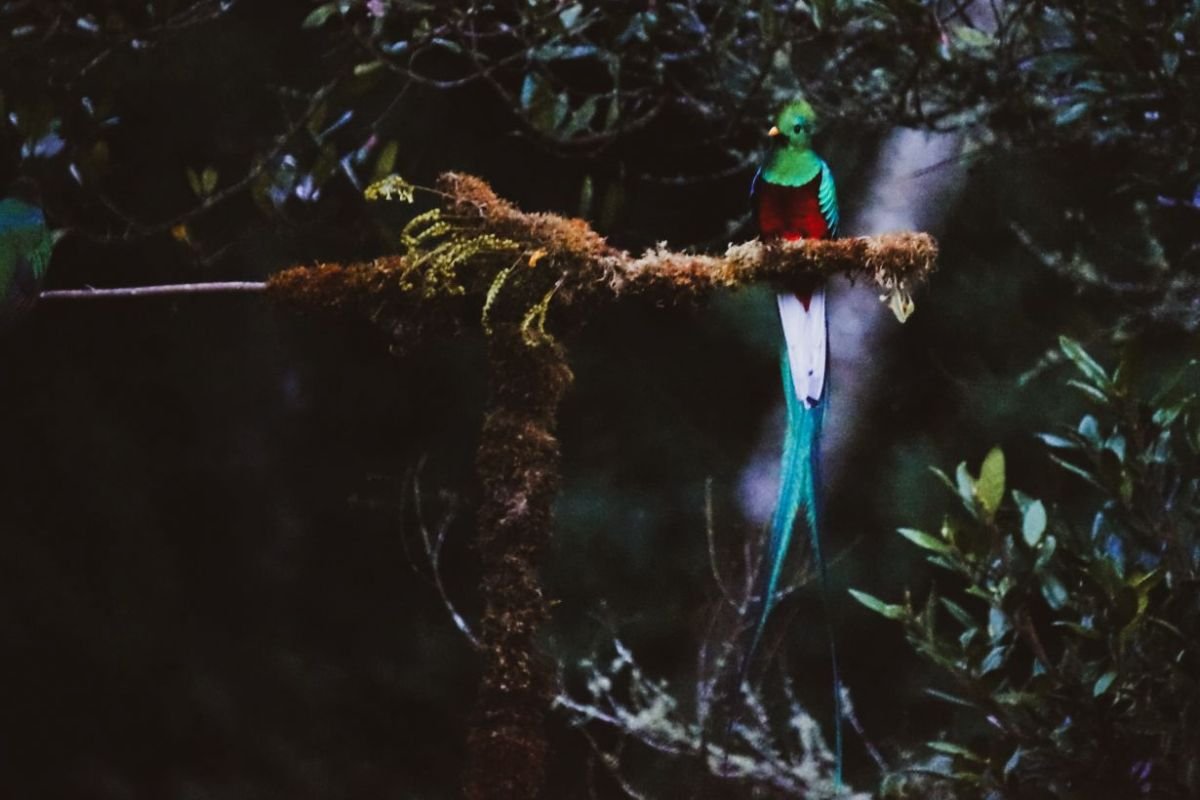
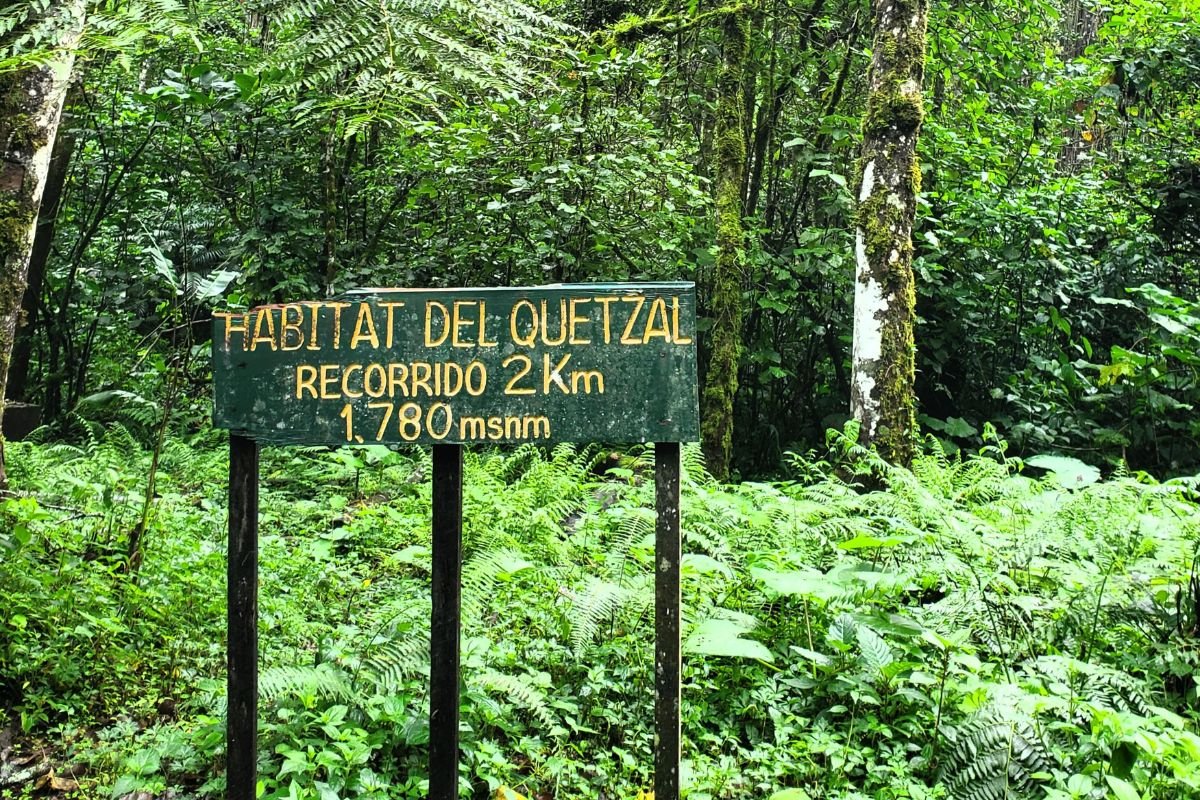
The quetzal is not a bird like any other. A Mayan symbol of freedom, it does not survive in captivity. It feeds mainly on wild berries and lives in misty, moss-rich, biodiverse high altitude forests. In Panama, the Chiriquí region in the west of the country is where you’re most likely to see it. Specifically in the Boquete region, the Barú volcano national park or along the quetzal trail, Sendero Los Quetzales, a mythical hike between Boquete and Volcano.
By the way, what do we know about the quetzal?
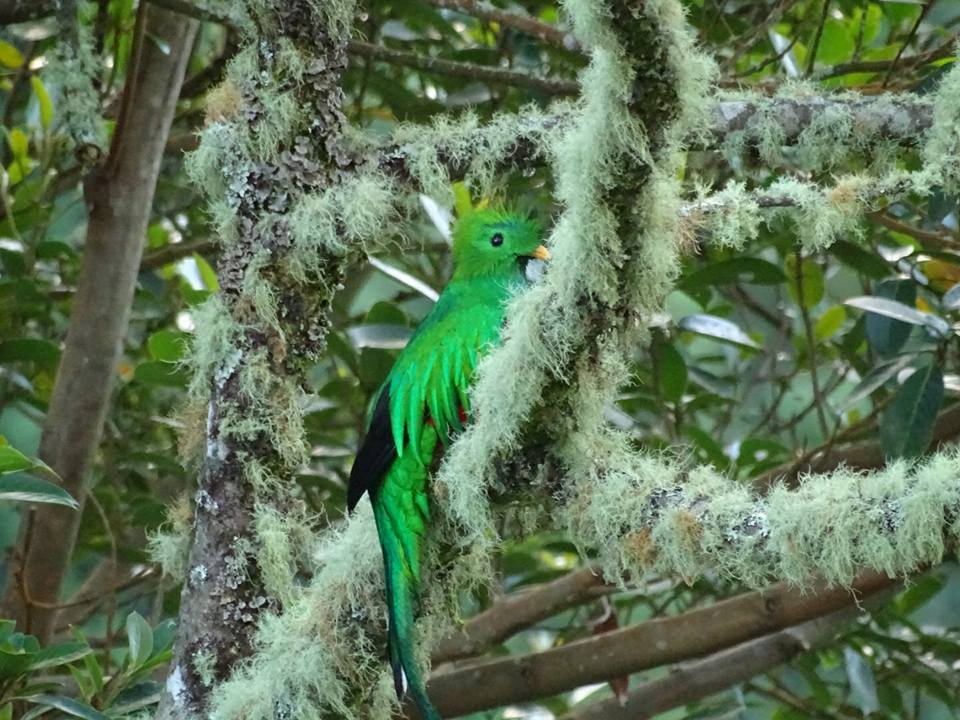
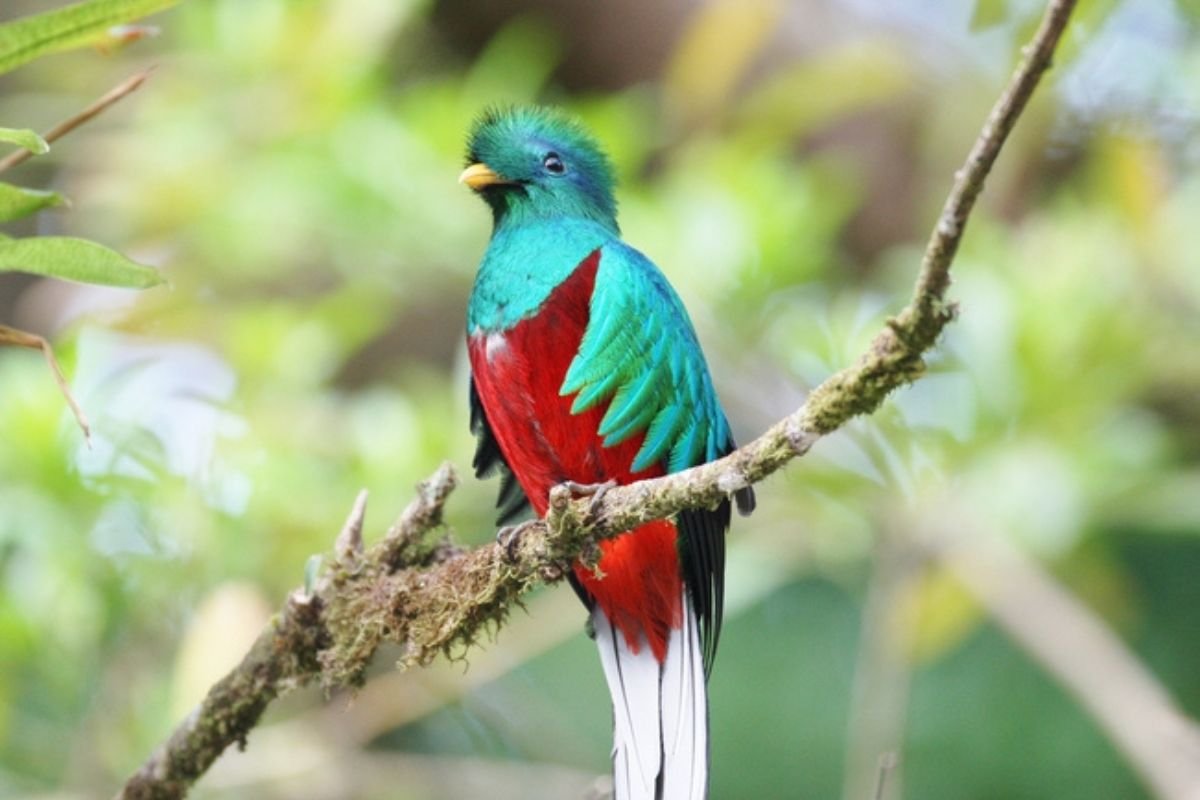
The term ” quetzal ” actually refers to several species of tropical birds, all found in Central and South America. Among them, the most emblematic, and the one seen in Panama, the famous resplendent quetzal. One of the quetzal’s distinctive features is its marked sexual dimorphism
- The male is spectacular: shiny green plumage with a metallic sheen, intense red breast, yellow beak and, above all, long feathers that can reach 60 cm during the breeding season.
- The female is more discreet: olive-green or gray-green plumage, pinkish or brownish breast, dark beak and no long tail feathers.
This marked difference serves a purpose: the female’s discretion protects the nest, while the male seduces and defends the territory.
When and how to observe it?
The best time to see quetzals in Panama is between February and May, during the nesting season. This is when the males put on their most beautiful finery and become most visible, especially in the early morning, when they set off in search of food.Guided hikes with local naturalists are highly recommended. Thanks to their knowledge of the terrain and their binoculars , they considerably increase the chances of observation, while taking care not to disturb the birds.
An unspoilt nature experience in Panama
Going in search of the quetzal is much more than a simple “wildlife spot”. It’s an immersion in one of Panama’s most fragile and fascinating ecosystems. On the way, you’ll pass through forests shrouded in mist, where you’ll hear other endemic species such as the trogon, tanager and purple-throated hummingbird. The silence, disturbed only by the wind in the trees or the raucous cry of the quetzal, creates an almost mystical atmosphere.For lovers of photography, small-group hikes offer ideal conditions, provided you are patient, discreet and well-equipped.
Travelling differently in Panama, with respect
As with all forms of ecotourism, observing the quetzal requires respect and caution. This species is sensitive to deforestation, and its natural habitat is diminishing year by year. That’s why Terra Panama works with committed local guides: walk in silence, don’t use flash or sound recordings to attract them: every gesture counts in preserving this ecosystem.
A must for naturalist travellers and not only
Whether you’re an amateur ornithologist, a nature photography enthusiast or simply curious, going in search of the quetzal in Panama is a uniqueexperience. And if you don’t come across the sacred bird this time, you’ll still come away with unforgettable images of a dense forest and new songs.