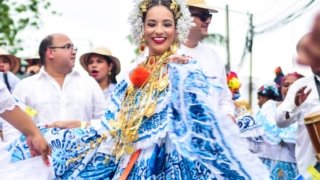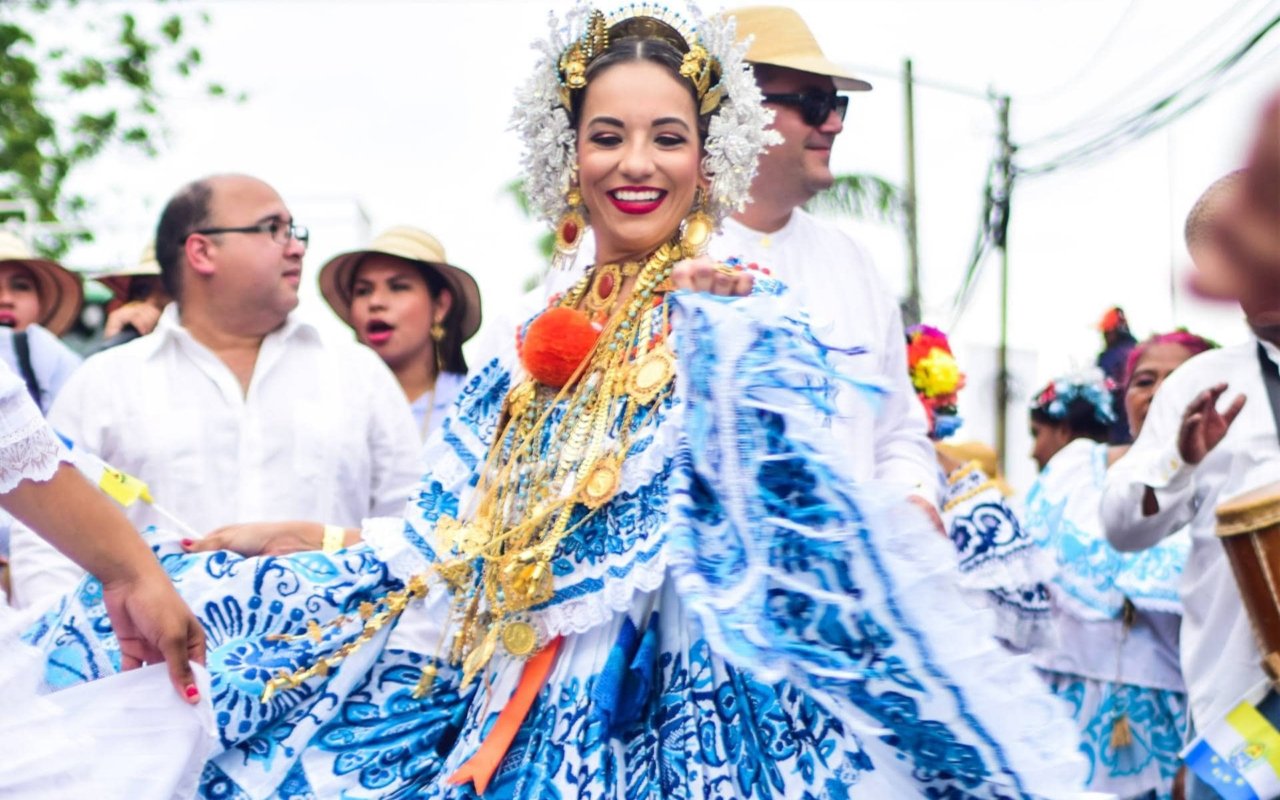
In Panama, the pollera is not just a traditional costume worn on special occasions. It’s a national pride, a living heritage, almost a state of mind. To understand the pollera is to enter a little into the soul of the country and show a genuine interest in Panamanian culture, a detail that always touches the locals deeply.
A story of heritage and crossbreeding
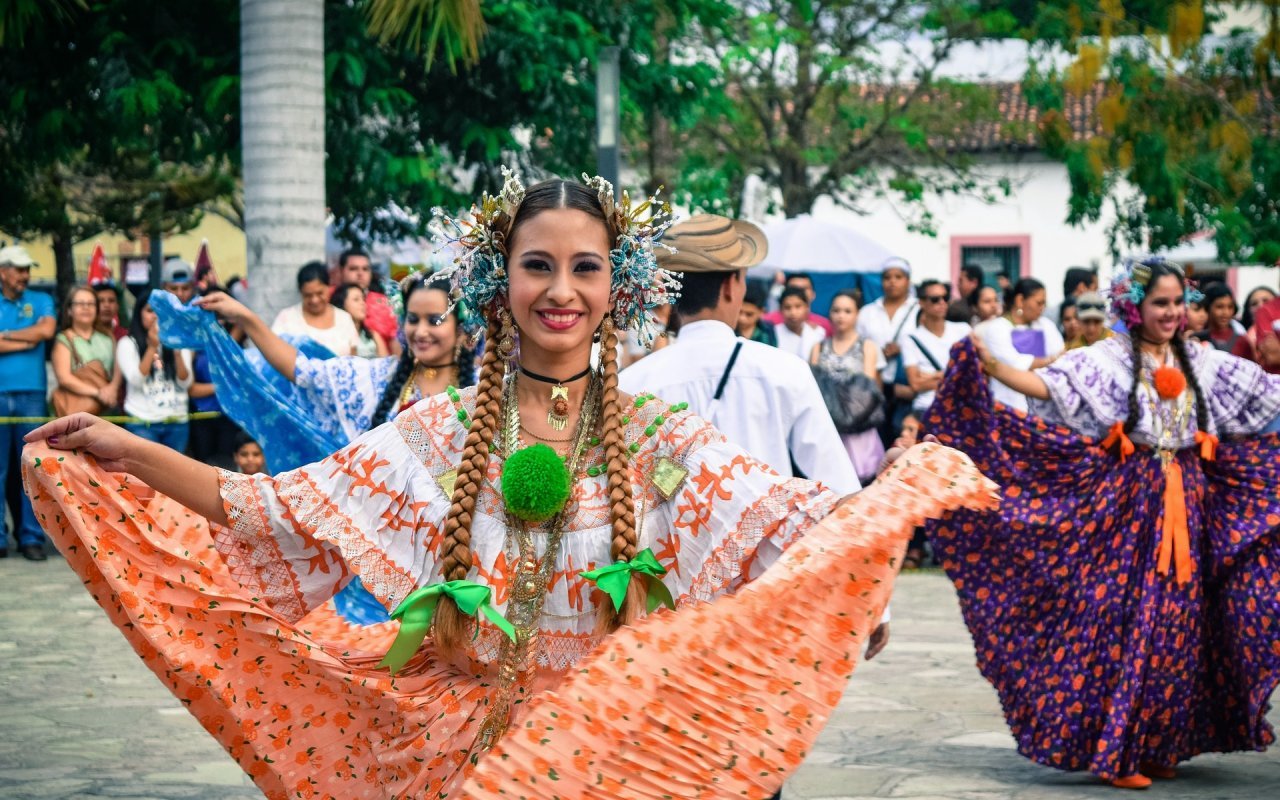
The history of the Panamanianpollera dates back to the XVIᵉ and XVIIᵉ centuries. Originally, it was inspired by the full skirts worn by Spanish women who arrived with the conquistadors. Over time, this European garment was transformed, enriched by indigenous and African influences, until it became the emblematic costume we know today.From a simple everyday garment, the pollera gradually became a symbol of national pride, worn during major celebrations, patronal feasts and cultural events. It is particularly honored every January during the famous Parade of a Thousand Polleras, held at Las Tablas in the Los Santos region, the cradle of Panamanian traditions, a spectacular event that brings together women from all over the country, dressed in their finest.
An incredible diversity of styles
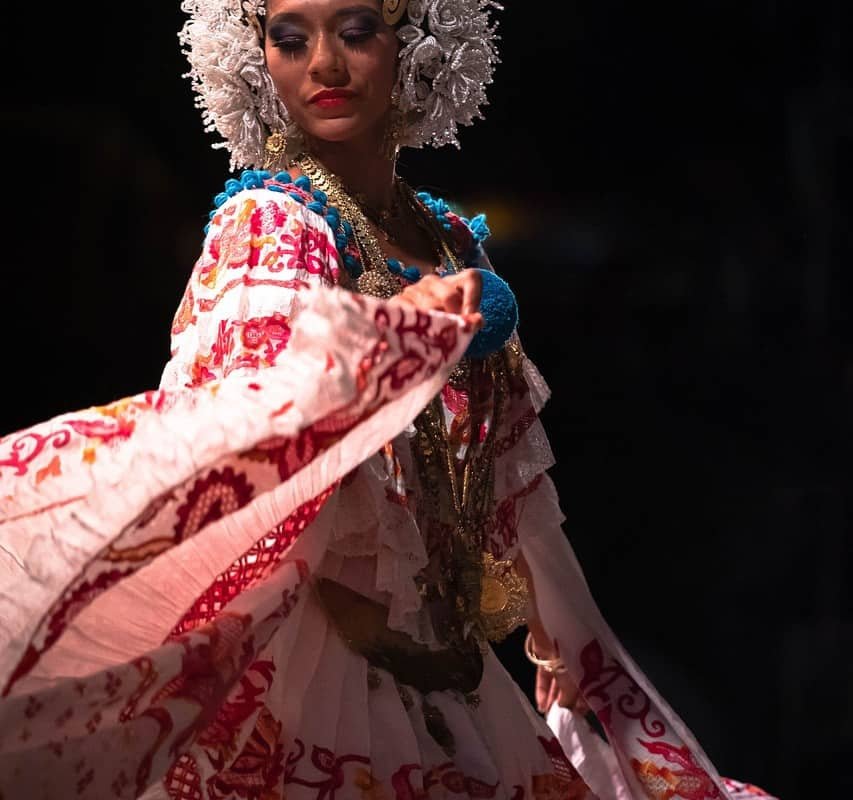
Contrary to popular belief, there isn’t just one pollera, but many. Some polleras are simple and light, intended for folk dances or more modest events. Others, on the contrary, are veritable works of art: richly embroidered, adorned with precious jewels, sometimes handed down from generation to generation.For example, in the Province of Los Santos (the heart of the pollera tradition), there are several very specific styles
- The gala pollera without labor, often white, worn for weddings and major celebrations.
- Gala polleras with labor, adorned with intricate embroidery or shaded motifs.
- Pollera montuna, used for village festivals and rural activities.
Each style obeys precise codes in terms of manufacture, colors, accessories, and sometimes even the way it’s worn.
What does "will pollute" really mean?
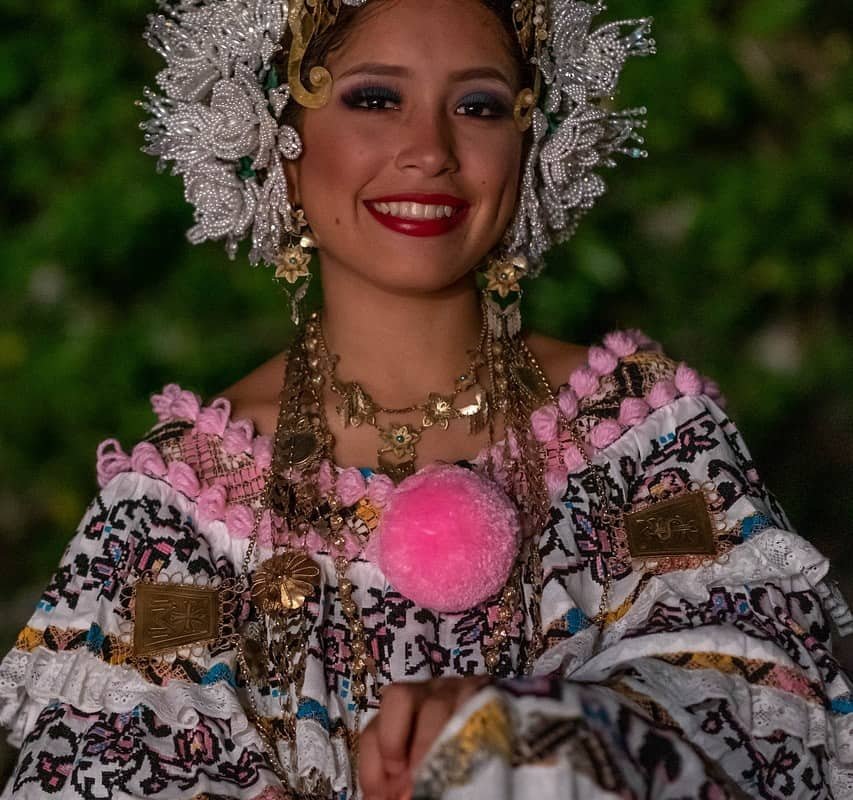
The word pollera doesn’t just refer to the dress. It encompasses the entire outfit: the garment, of course, but also the jewelry, accessories and even the way in which they are worn.The famous tembleques, pearl ornaments placed in the hair, are an integral part of the pollera, as is the gold jewelry. Each piece has a precise role and must be worn in a well-defined order. Connoisseurs pay particular attention… and immediately spot the slightest mistake.The Panamanian pollera consists of two main elements
- the camisola, a white shirt adorned with embroidery, ruffles (arandelas) and elaborate sleeves;
- the pollerón, a wide skirt composed of a belt (pretina), a body and a wide falda decorated with different sections of fabric called sustos.
The ensemble is completed by zarcillos (earrings), gold necklaces and bracelets, and sometimes a sombrero, depending on the pollera style .
The gold that accompanies the pollera: a tradition in its own right
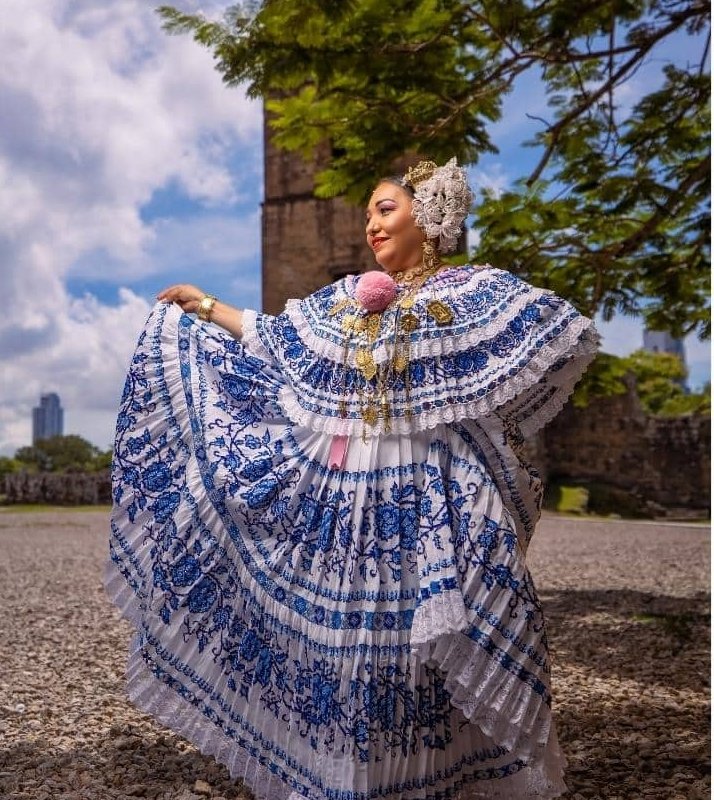
The magic of the pollera is not limited to the garment: the jewelry that accompanies it is a work of art in itself. The tradition of jewelry – often in 10K gold – is ancient and deeply rooted in Panamanian craftsmanship. It’s not so much the value of the metal that counts, but the meticulousness of the craftsmanship. Local goldsmiths spend hours crafting delicate pieces such as
- zarcillos dormilonas, moving earrings that catch the light
- mosquetas, small flower-shaped ornaments
- rosarios integrated into neck jewelry, sometimes with pearls or semi-precious stones
Even peinetas (the decorative combs that adorn headdresses) are traditionally made from precious materials, often with filigree details, requiring exceptional skill. This craft is passed down from generation to generation, not in formal schools, but through observation and family apprenticeship.
A suit for living
Making a pollera takes time, patience and know-how: some of the most elaborate models take almost a year to complete, piece by piece. And as each pollera is made to measure, no two are identical. The dress thus becomes a reflection of the wearer’s personality, as well as a symbol of her attachment to Panamanian culture.
Going further, to the heart of tradition
For those who want to go beyond reading and experience the pollera from the inside, Terra Panama offers immersive workshops in Las Tablas, the cradle of this tradition. Here, pollera players – embroiderers, artisans, tembleque designers and jewelry connoisseurs – share their know-how and vision. Each brings his or her own gestures, experience and history, to plunge visitors into the heart of the action, but also the thought and patience behind nearly a year’s worth of design. A unique human and cultural encounter, to understand pollera not just as a costume, but as a living heritage.
In short, pollera isn’t just a costume. It’s a living tradition, a cultural heritage woven from patterns, colors, family histories and artisan skills. It’s also a way of celebrating Panamanian identity in all its richness and diversity, from Las Tablas to every village that perpetuates this dance of thread and gold.