When we think of the Congo, we spontaneously think of the DRC, that immense tropical African country that was the setting for one of Tintin’s first adventures. However, this name actually represents a very important culture among Panama’s Afro-Caribbean communities, in a region stretching roughly between Colon, Lake Gatun and Portobelo.
Why Congo art in Panama?
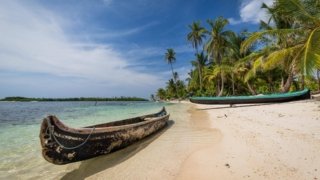
On his fourth voyage, in 1502, Christopher Columbus set foot in Portobelo Bay, on Panama’s Caribbean coast. Thanks to its geographical position, Portobelo soon became one of the nerve centers of the “Indies” trade. Gold from Peru and silver from Bolivia converged on Panama City via the Pacific Ocean, before being transported with difficulty across the isthmus to Portobelo, from where ships set sail for Spain.Activity exploded particularly during the annual 40-day Portobelo Fair, a not-to-be-missed rendezvous for traders, pirates and privateers alike. Henry Morgan, the most famous of privateers, regularly shopped there before attacking Panama City, this time for a pittance… This preponderance in the colonial market and the importance of piracy justified the settlement in Portobelo Bay, as well as the three forts (San Jeronimo is the most famous) that were supposed to guard the city.But this trade could not develop without the support of slaves, both Amerindian and African. The first Africans arrived in Panama in 1514 to work in agriculture. From 1523 onwards, a veritable slave trade began, with men generally coming from the Gulf of Guinea, notably Angola, Cameroon, Guinea and Congo. Despite the difficult conditions, evangelization and scattered origins of the slaves, they managed to maintain their traditions and develop a typical culture, the fruit of various mixtures and contact with the local populations.Following numerous uprisings, autonomous villages (called palenques) led by black representatives came into being. In 1607, a pacification treaty offered a few more freedoms that allowed this new culture to develop.
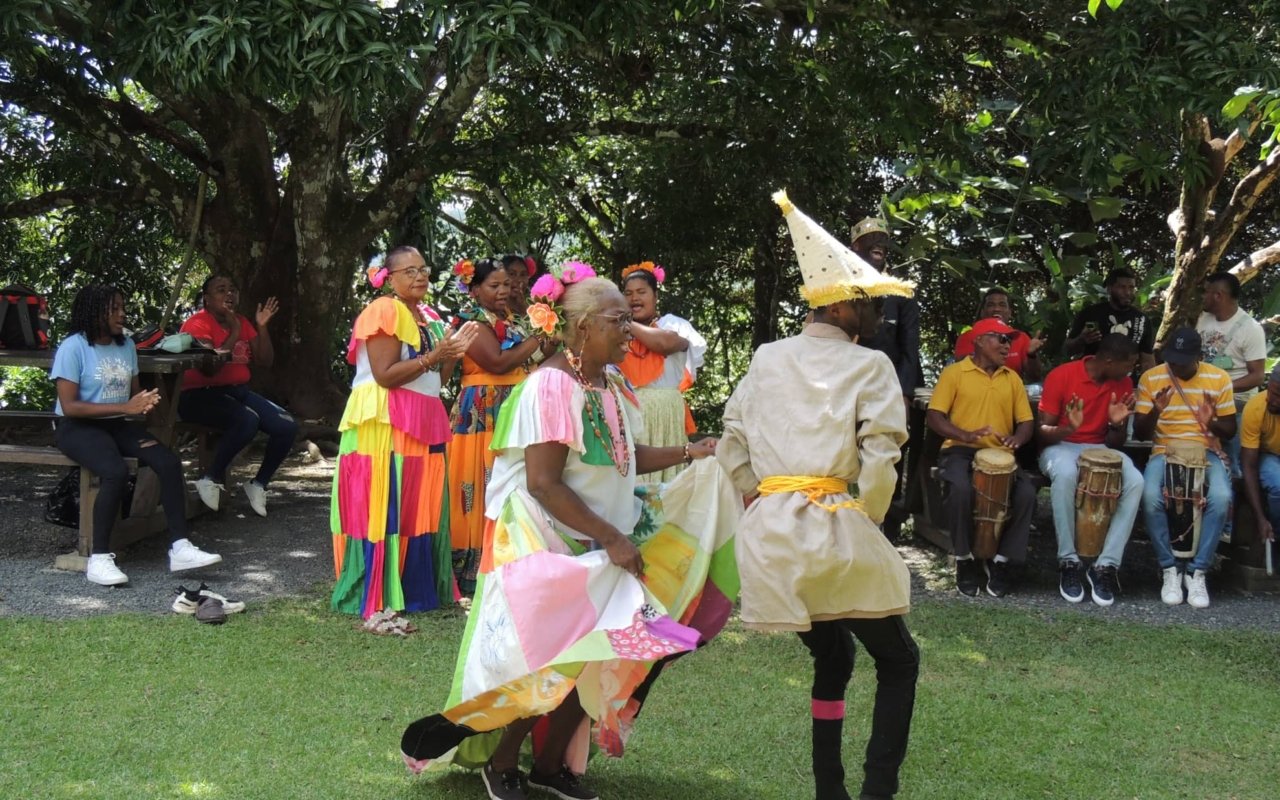
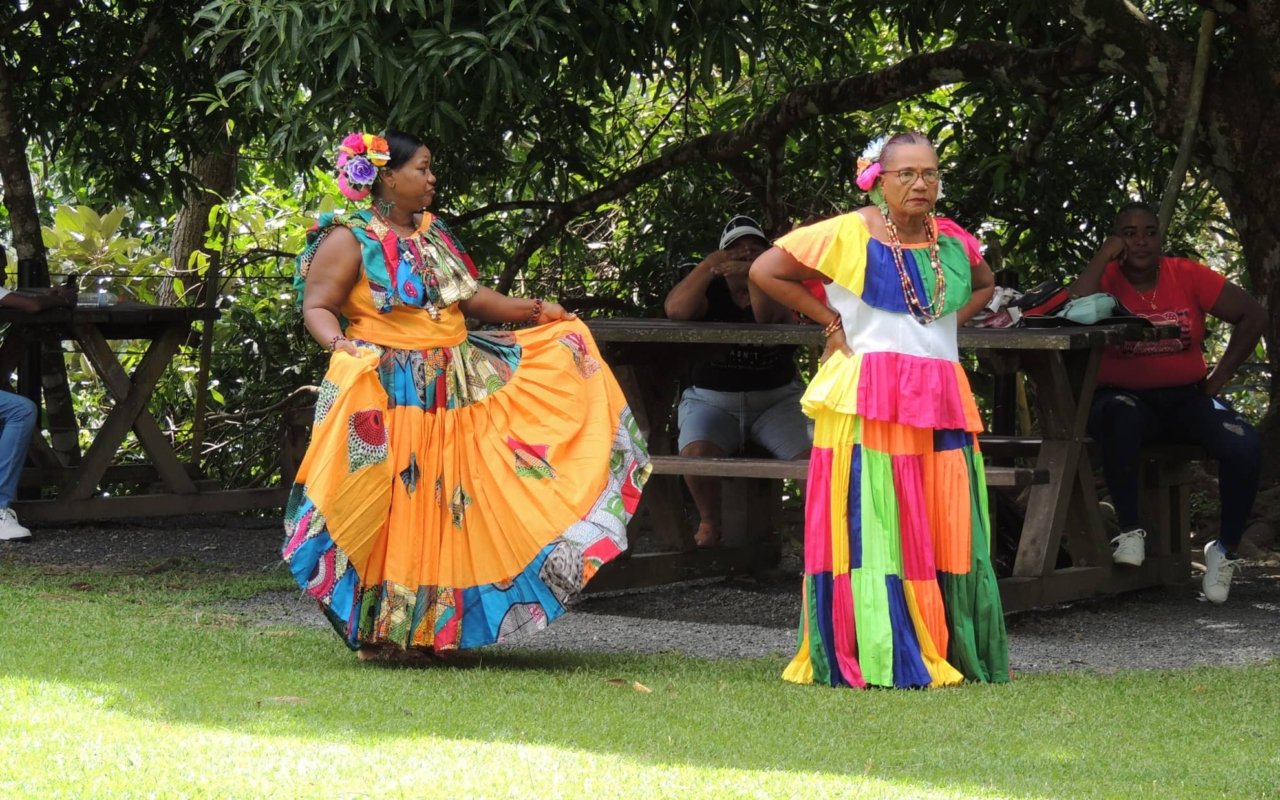
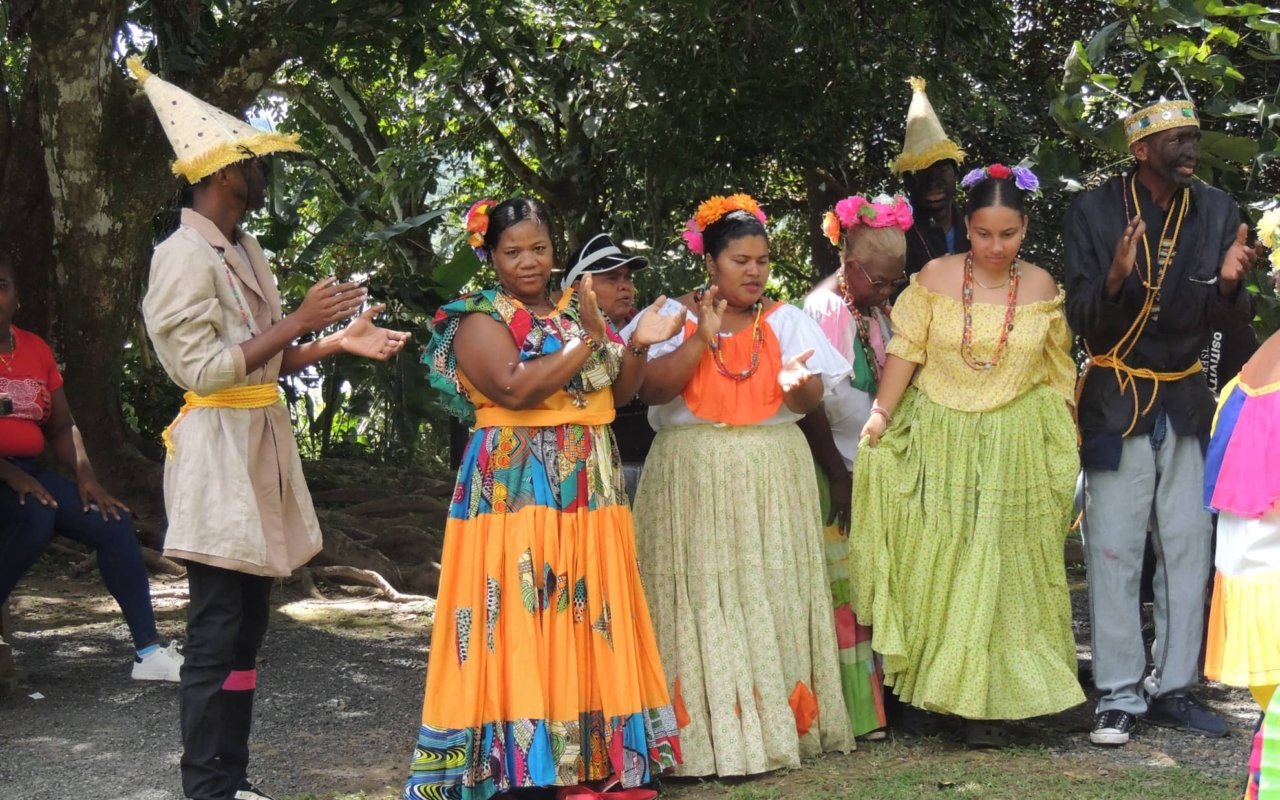
Congo dances
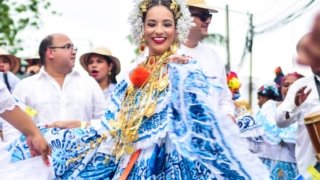
In addition to a language that blends African dialects with Spanish, French, English and Dutch, this culture is above all defined by its dance. A violent, erotic expression embellished with mimicry and theatrical representations reminiscent of the slave trade and revolt. From the earliest palenques, these Afro-Caribbeans gathered to dance and mock the European settlers, as well as to recall their traditions from Africa.Likewise, these dances challenged the divine order promoted by the evangelists, who promised the devil to bad believers. And as in many cultures, the devil in Congo dance represents the colonists. For rhythm, there are three types of drum. On the other hand, there is no set choreography. Movements are unique to each man and woman, resulting from spontaneous, intuitive movements.Usually, the women sway quietly and invite their suitor to join them by wiggling the double of their skirt. The man then approaches to start a joint dance, but it’s not uncommon for this invitation to be a decoy and for the woman to escape in another direction.The women wear the pollera, a traditional Panamanian garment, and the clothes are usually very colorful, to represent the beauty of nature.
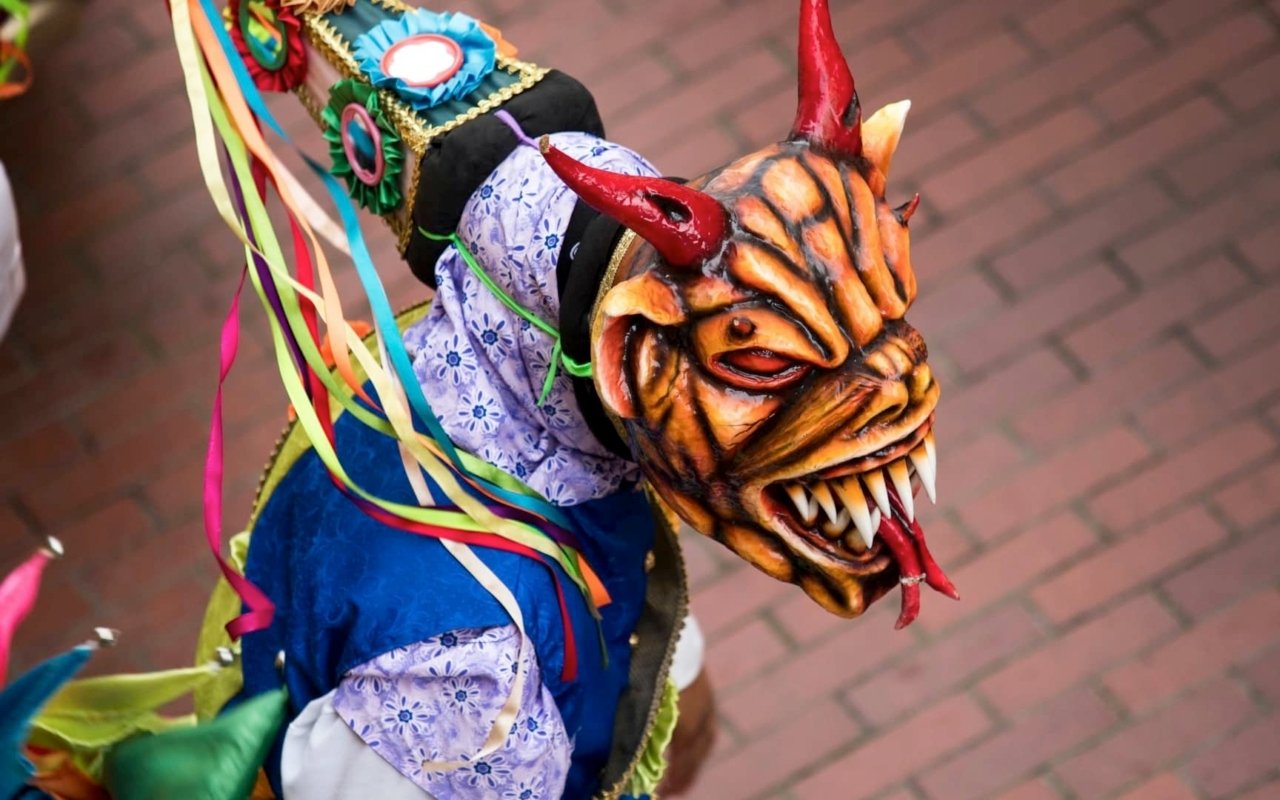
Festival Diablos y Congos
The Diablos y Congos festival is the best opportunity to discover these traditions. Usually held over one day on a Saturday in March,the festival has only existed since 1999, thanks to the Realce Histórico de Portobelogroup , which aims to keep Congo traditions alive, especially the ritual dances of the Congos and devils. Dancers and devils flock from all over the region to perform on this day. Artisans take advantage of the event to showcase their creations, clothing and masks, while others may present their own dances, songs or photographic exhibitions.Today, the festival is organized by the Portobelo Foundation and the Realce Histórico de Portobelo group, with the support of the Panama Tourism Authority and the National Institute of Culture
Congo culture and painting
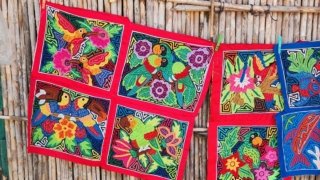
Congo culture lives on today through the many painters in Portobelo. The Otro Lado, Casa Congo and Casa Brujohotels use the works of these local artists to decorate their rooms, creating a typical, wonderful and highly colorful environment.To discover different works and photographs, visit Casa Congo, which has a large gallery, or contact the Portobelo Foundationdirectly.