A story as old as time
Three million years ago, a geological phenomenon submerged a strip of land, leaving the Isthmus of Panama. Bordered on either side by the Atlantic and Pacific Oceans, Central America was born. It is from this natural transformation that the Panama Canal draws its fascinating story:a titanic project for international maritime trade that will go down as one of the most costly technical challenges in history. A tug-of-war between man and nature, and a landscape change that will alter the map of the world forever.
A link between two oceans
With the growth of maritime trade, every possible means was explored to reduce transport times for the commercial fleet, which until then had used the Cape Horn route at the southern tip of South America.In 1513, on the orders of the Spanish Crown, Vasco Núñez de Balboa was sent to Central America to attempt to discover a natural passage linking the two oceans. By this time, the Isthmus of Panama was recognized as the narrowest passage in Central America. From 1850 to 1855, a 75 km-long railroad was built from Colón on the Atlantic coast to Panama on the Pacific
France at the head of the ocean route
Frenchman Ferdinand de Lesseps, buoyed by the success of the Suez Canal, took all the necessary steps to become the project’s sponsor, advocating the creation of a sea-level route rather than a canal with locks.
In 1878, when Panama was not yet an independent state, the Colombian Congress signed the “Wise Convention” granting Ferdinand de Lesseps’ Compagnie Universelle du Canal Interocéanique de Panama responsibility for the project,which required the efforts of over 17,000 workers from the Caribbean islands and French engineers. But the fragile soils, heavy rains, Rio Chagres and tropical climate were a real calamity for the engineers and workers.
Malaria and yellow fever added to their ordeal, leading to a veritable hecatomb: more than 6,300 graves were dug!
Under pressure from investors, Ferdinand de Lesseps finally relaunched the project in 1887. He called on the services of Gustave Eiffel, who designed a ten-lock project for the canal that would be better adapted to the region’s topography. Unfortunately, in the face of intransigent natural conditions, the work was considerably delayed, leading to the company’s bankruptcy on February 4, 1889, and the Panama scandal: what Lesseps had envisaged as the triumph of success over adversity became one of mankind’s greatest cases of corruption
One man’s misfortune is another man’s gain
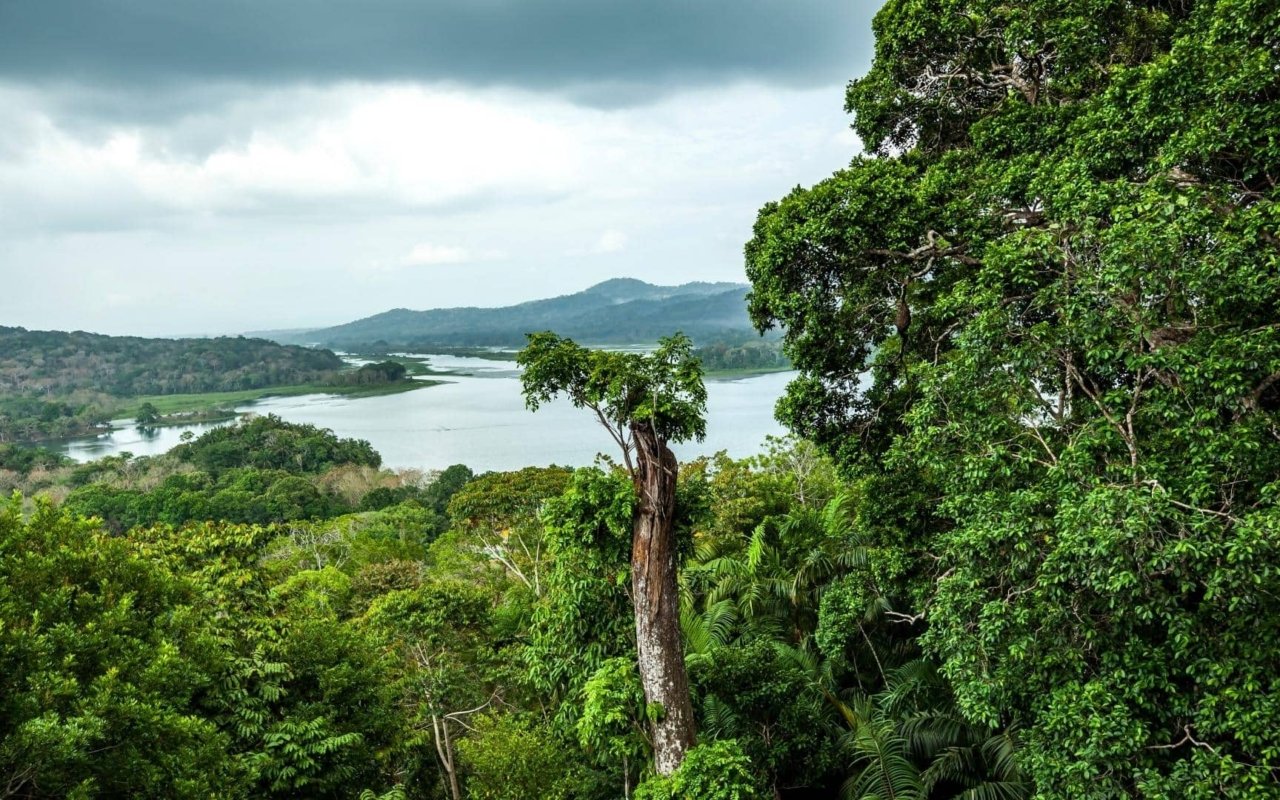
On November 3, 1903, supported by the United States, Panama gained its independence and the French concession was bought by the Americans. TheodoreRoosevelt1, President of the United States, chose first John Findley Wallace and then John Frank Stevens as construction engineers, to be succeeded by G.W. Goethals. Confronted with the same geological difficulties as the French, the Americans maintained the idea of a level project, but with only 3 sets of locks instead of ten. It was therefore proposed to dam the Rio Chagres near its mouth to the ocean, and to flood part of the country to form what would become the world’s largest man-made lake when it was created, Lake Gatún. To avoid a repeat of the French scenario, in 1904 the Americans took extensive sanitary measures, vaccinating all workers against yellow fever.In 1914, the canal was inaugurated in a world turned upside down. On August 15, as Europe entered the war, the first crossing of what would become known as the eighth wonder of the world was made by the ship Ancón.
Water, the central element of this lock project
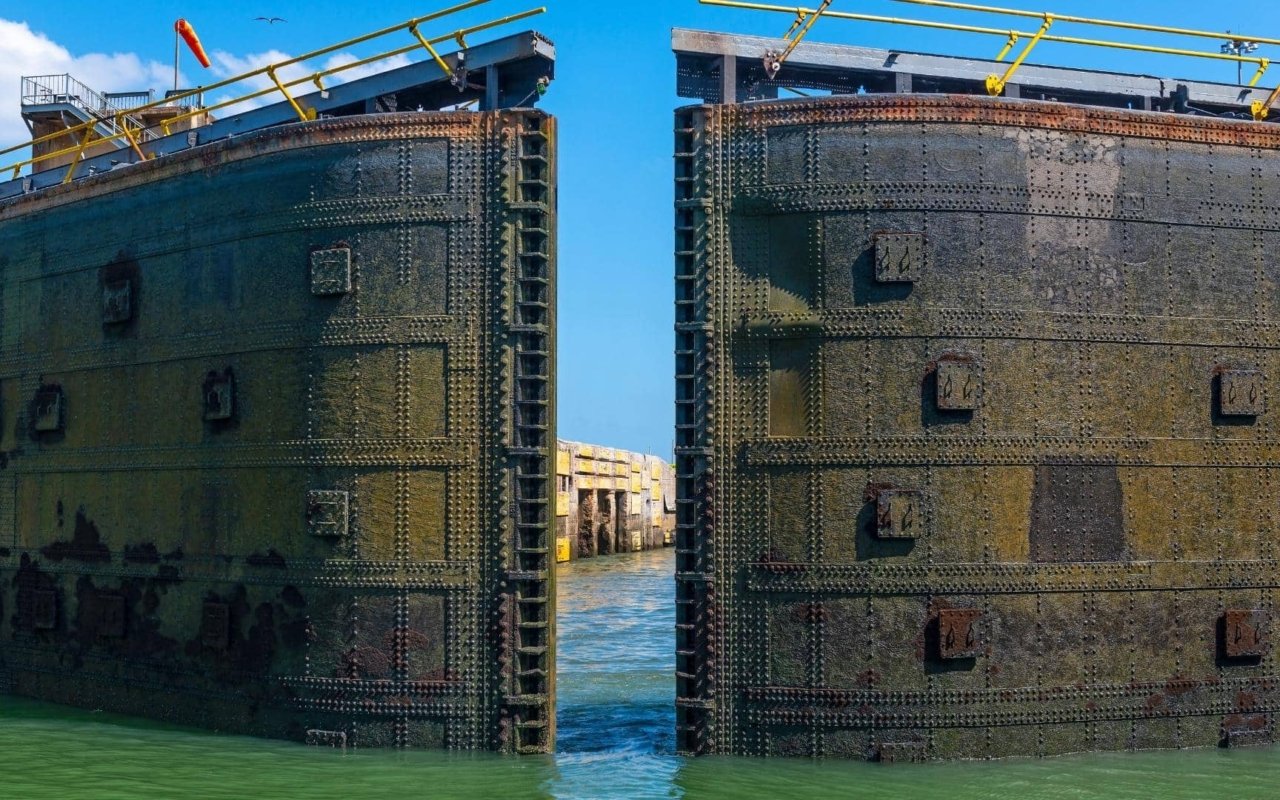
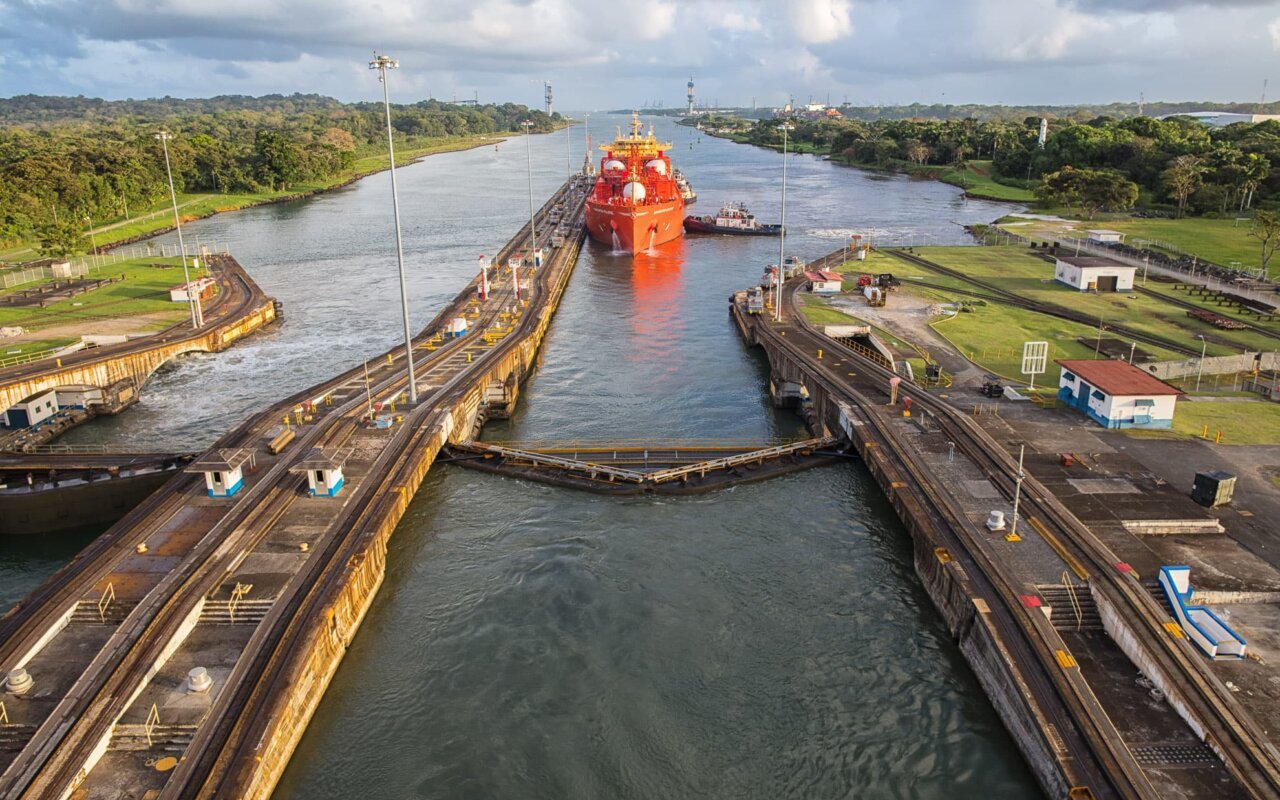
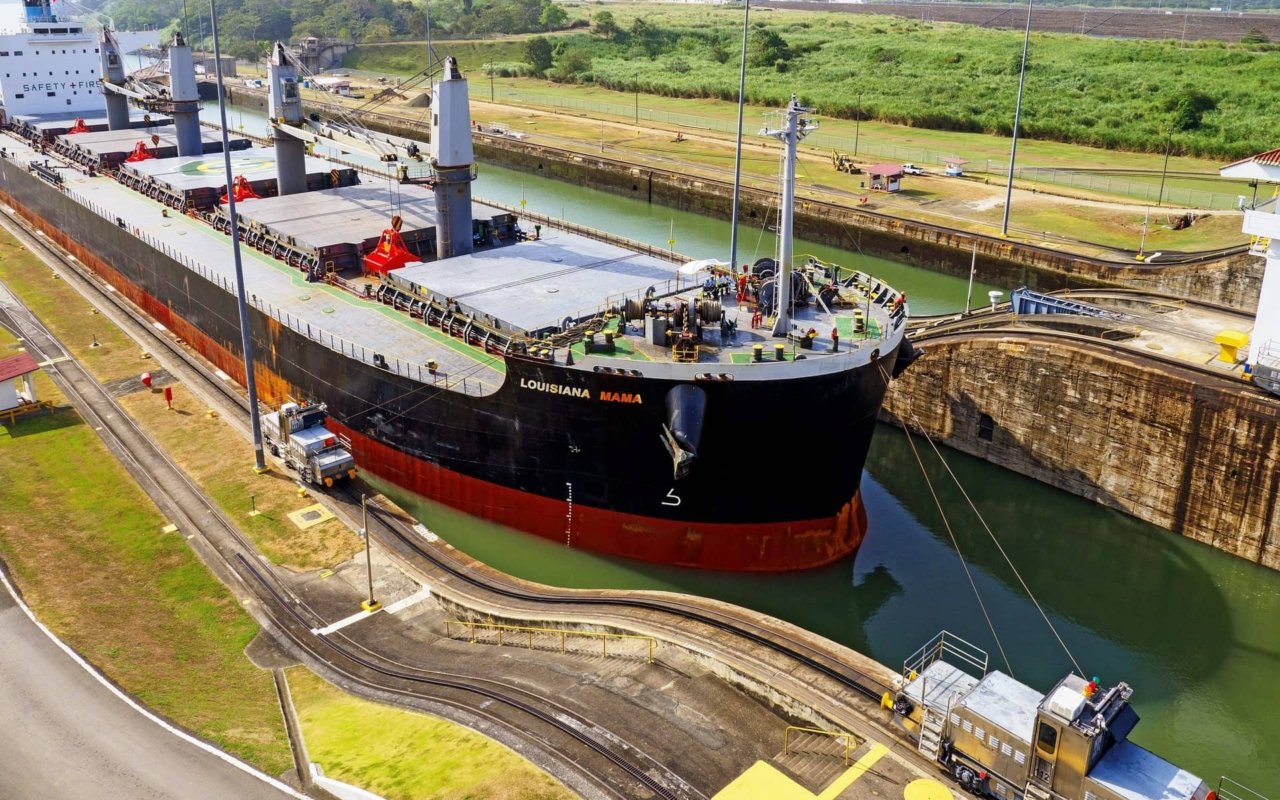
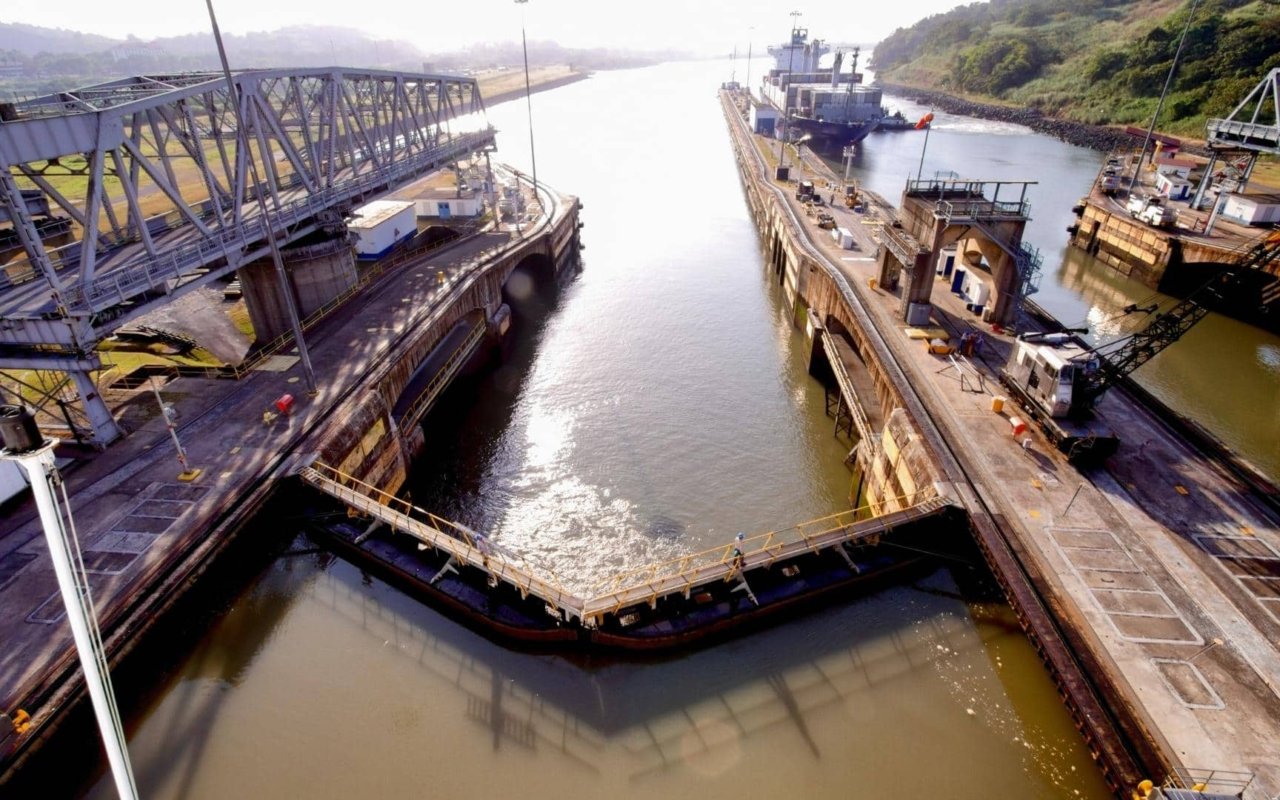
Three factors were decisive in the engineers’ choice to build the canal: a narrow isthmus, a high-flowing river and abundant rainfall. The locks operate independently. Their dimensions (33.53 meters wide, 304.8 meters long) allowed the largest ships in the commercial fleet of the time to use the canal. A number of ships were subsequently designed to fit the limits of the locks and the depth of the canal: the “Panamax”.The role of the mules, small locomotives located on the lock walls, was to keep the ships centered in the chamber. They work in pairs for both upbound and downbound boats
The challenges and future of a century-old canal
The 77 km of this ocean route linking the Gulf of Panama in the Pacific Ocean to the Caribbean Sea in the Atlantic Ocean, has reduced the old shipping route between New York and San Francisco from 22,500 km to 9,500 km.The Panama Canal has profoundly changed maritime transport and the global economy, as well as the Panamanian one.
In 1977, when the United States ceded sovereignty over the canal back to Panama, it became a real driving force behind the country’s economy,accounting for 7% of GDP in 2008 and creating new services and jobs.Although the canal is celebrating its centenary this year, its future is nevertheless being called into question.
The increase in traffic between the US East Coast and Asia is creating a saturation effect.
In 2006, a referendum voted 78% in favor of a project to widen the canal. Completion is scheduled for 2015. However, other options are competing with the canal, notably in Nicaragua (a canal-building project) and in the Arctic, where new shipping routes are becoming increasingly accessible as a result of global warming. The impact on the ecosystem is also being questioned, and Lake Gatún is beginning to reach its water reserve limits.
The Panama Canal in figures
- 1914: inauguration of the Panama Canal
- 77 km long
- 8-10 hours crossing time
- 40 ships a day, 15,000 a year
- 5% of the commercial maritime fleet
- 3 locks, 33.53 meters wide, 304.8 meters long, 25 meters high and 200,000 m3 of water per ship passage
- Lake Gatún: 423 km²