Discover important events in Panama
This cultural agenda will be updated regularly to be as exhaustive as possible for thecurrent year. At the end of each year, it will be completely revised for the following year, with the possibility of building personalized itineraries around cultural events, and thus adding a superior dimension to your stay in Panama. These festivities reflect Panama’s cultural richness, and are an ideal opportunity to discover the country’s music, dance, gastronomy and traditions.
January 2026
Feast of St. Epiphany (Día de Reyes) – January 6
Although this holiday is more popular in Spain and other Latin American countries, in Panama it is also celebrated with parades and events to mark the arrival of the Three Wise Men. Children traditionally receive gifts on this day
Martyrs’ Day – January 9
National holiday commemorating the riots of January 9, 1964, when Panamanians claimed sovereignty over the Panama Canal Zone. The riot was sparked by a dispute between Panamanian students who wanted to fly the Panamanian flag next to the US flag in the Canal Zone. 21 Panamanians and four US soldiers were killed in the clashes, which marked a turning point in the history of Panama-US relations
Panama International Jazz Festival – mid-January
This festival celebrates the historical memory of Panamanian jazz and its worldwide influence. It has become a unique cultural, educational and tourist experience, with educational programs and serves as an audition center for the world’s top music schools. For further information: panamajazzfestival.com
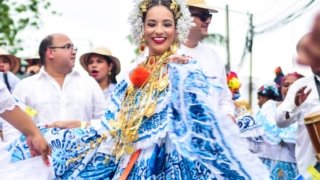
Festival des Mil Polleras (Thousand Polleras) – late January
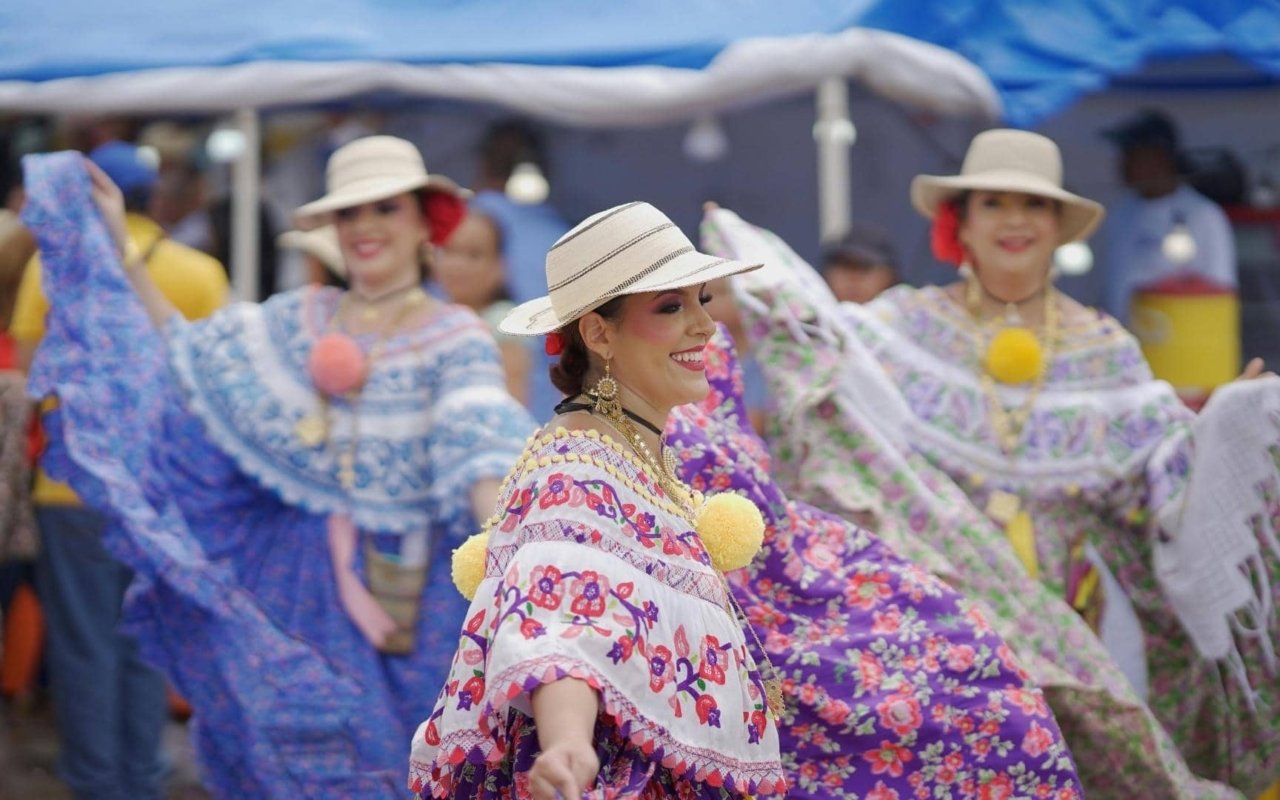
This festival is held in Las Tablas, in the Azuero region, and attracts local and international audiences. Hundreds of women of different generations parade in these traditional hand-embroidered dresses, accompanied by folk music. Every detail of the pollera has historical significance, reflecting Panama’s regions and traditions. The parade is a celebration of the country’s cultural identity and a moment of community solidarity, where people share and preserve their heritage. In 2022, the pollera was inscribed on UNESCO’s intangible cultural heritage list
February 2026
Panama Carnival – February 21-24, 2026
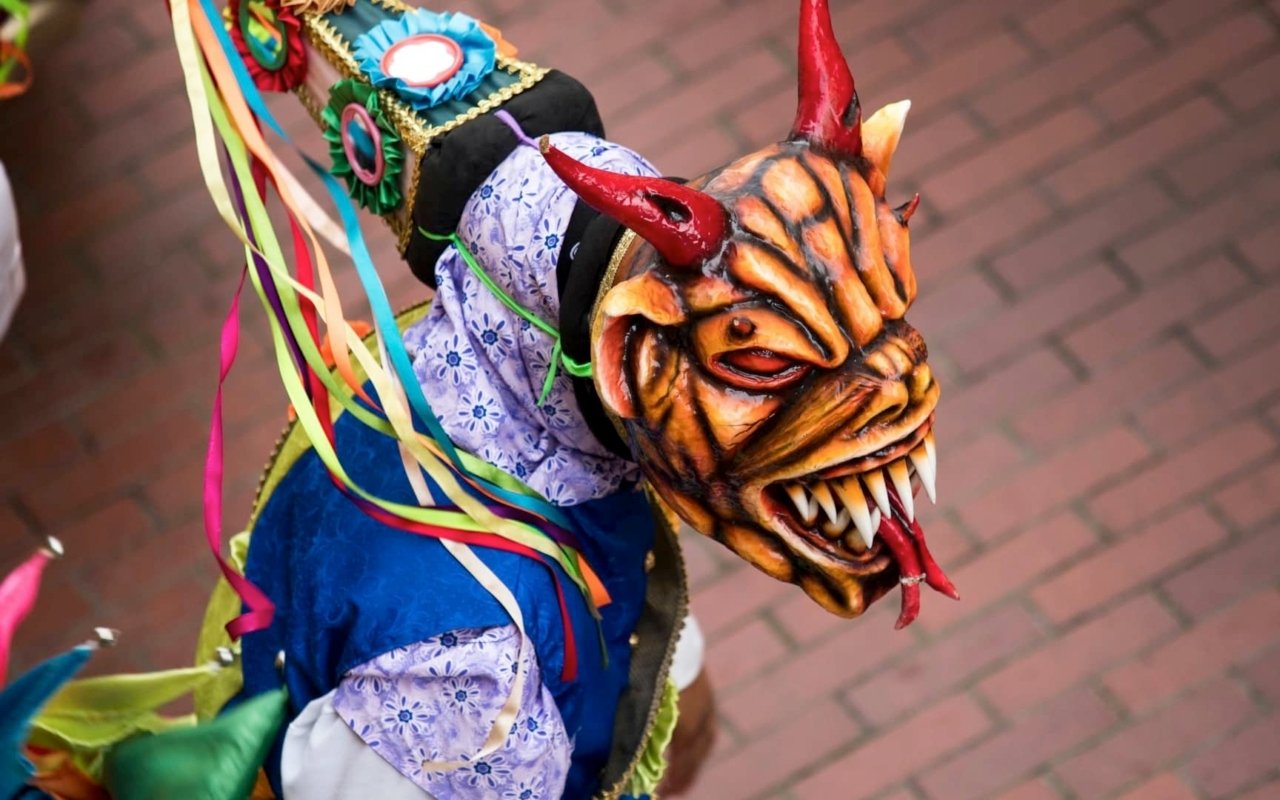
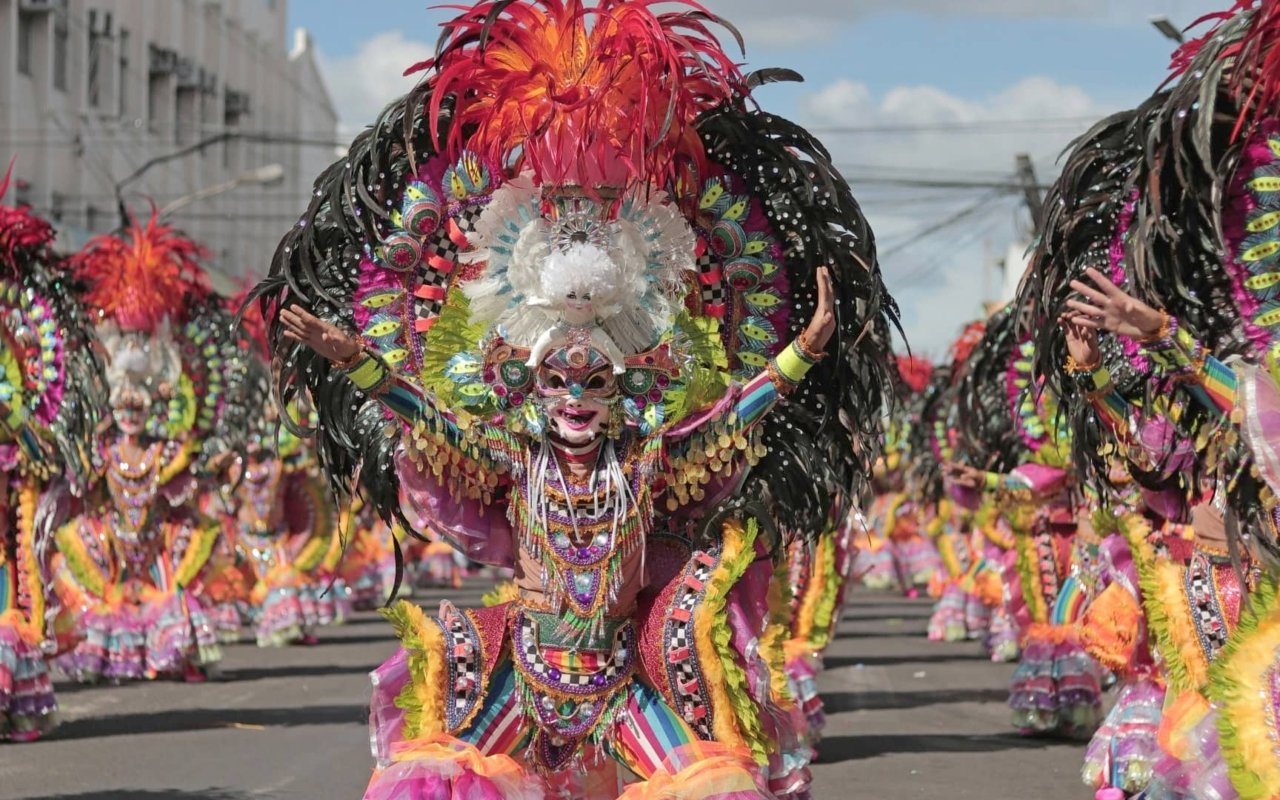
One of the country’s most famous events, the Panama Carnival is a veritable spectacle of music, dance and colorful costumes. The festivities take place over the four days preceding Ash Wednesday, with parades, concerts and street parties.Las Tablas hosts the most authentic and intense carnival, with the historic rivalry between Calle Arriba and Calle Abajo vying for the most spectacular floats and the most elegant queens. Panama City also organizes festivities on the Cinta Costera, with free concerts attracting up to 500,000 people. Penonomé, in the province of Coclé, maintains a more family-oriented carnival with a strong presence of diablicos sucios (dirty devils), masked characters from Congo traditions. Monday and Tuesday are national holidays. The festivities culminate on Tuesday evening with the burial of the sardine (entierro de la sardina), a ritual symbolically marking the end of excess before Lent
March 2026
Congos y Diablos Festival – March (even-numbered years)
This biennial festival in Portobelo represents Panama’s African heritage. It features spectacular masks and energetic dancing to lively music, celebrating the resilience and richness of the African traditions that have shaped Panama’s social and cultural fabric over the centuries. The congos symbolically re-enact the resistance of the maroon slaves through dance, song and theatrical performances
April 2026
Semana Santa (Holy Week) – March 29 to April 5, 2026
Semana Santa is a major religious event in Panama, marked by processions, religious celebrations and family gatherings. It is particularly important in the country’s Catholic communities. Colonial towns such as Portobelo, La Villa de Los Santos and Chitré organize spectacular processions. Holy Thursday and Friday are national holidays. Many Panamanians take advantage of this period to go to the beach or visit family in the interior of the country
Panama International Film Festival (IFF Panama) – April
The aim is to make Panama the film center of Central America and the Caribbean, by strengthening the industry and national identity. It aims to create a regional film festival, foster dialogue on cinema and turn the country into a tourist destination and international film location, generating income and professional opportunities. For more information: iffpanama.org
June 2026
Corpus Christi Festival – June 4, 2026
Christian festival held on the Thursday 60 days after Easter Sunday, celebrating the Eucharist in the village of La Villa de Los Santos, province of Los Santos. Over time, it has been joined by popular dances with the famous diablicos masks, parades, theatrical performances and local traditions such as the superb flower carpets made by the locals. This unique celebration blends Spanish Catholic traditions with indigenous and African influences. For further information: micultura.gob.pa
July 2026
Festival de la Pollera – July 22, 2026
This festival, in honor of the feast of Santa Librada (patron saint of Las Tablas), celebrates the pollera, the traditional Panamanian dress, with parades, dances and cultural events, mainly in the town of Las Tablas. During the festival, several competitions are held to evaluate the polleras’ craft techniques: quality of embroidery, authenticity of motifs, assembly of pieces. It’s a great celebration of local folklore and culture, where craftswomen showcase their skills handed down from generation to generation. To find out more: micultura.gob.pa
August 2026
Festival del Manito Ocueño – second weekend in August
An important folklore event held in Ocú in the province of Herrera, where the traditions of the village’s peasants from the last century are honored. The peasants used to greet each other by shaking hands, then raising them to forehead height and saying “ta’ la manito”, hence the name of the festival. The event also includes a traditional wedding for a couple born in Ocú (by drawing lots). After the religious ceremony, the couple ride through the village on a white horse, protected by a black umbrella. Their procession is accompanied by traditional song and dance. The festival also includes pollera parades, craft demonstrations and folk music performances
Feria Internacional de David – mid-August
This agricultural and trade fair in Chiriquí province celebrates local livestock, agriculture and industry. On the program: agricultural exhibitions, rodeos, concerts, parades and gastronomic stands. It’s one of the most important events in Panama’s western region
September 2026
Festival Nacional de la Mejorana – September 20-29, 2026
This festival, held in Guararé in the province of Los Santos, highlights Panamanian folklore and rural customs. On the program: dance competitions (cumbia, punto, tamborito), parades in pollera, traditional musical performances with the mejorana instrument (a small five-string guitar), bullfights and popular balls. Created in 1949 by Manuel Fernando Zárate in gratitude to the Virgen de las Mercedes, the festival coincides with Guararé’s patron saint’s day. Over 80 folkloric delegations from all over the country perform for a week in what is considered Panama’s biggest festival of traditions
October 2026
Festival del Cristo Negro – October 21
A powerful symbol of faith and identity, this religious festival is celebrated in Portobelo. Its origins date back to colonial times, when a statue of the Black Christ, known as “El Nazareno”, was found by fishermen on the shores. Every October 21, thousands of pilgrims (up to 50,000) converge on the town for the statue’s spectacular procession through the streets. Some devotees kneel for the last few kilometers as a sign of devotion. The celebration blends Catholic traditions with Afro-Caribbean influences
Festival del Torito Guapo – late October
The Festival del Torito Guapo pays tribute to the rich livestock and agriculture of the Antón region, a small town in the province of Coclé. It’s an opportunity to showcase local traditions, music and dance, as well as the central figure: the “Torito Guapo” (cute little bull), symbol of strength and bravery. The festival includes rodeos, livestock shows, folk parades and concerts
November 2026
Día de los Muertos (Day of the Dead) – November 2
This day is dedicated to honoring the dead with religious ceremonies, cemetery visits and family meals. Families clean graves, bring flowers (mainly chrysanthemums) and light candles in memory of their departed loved ones
Fiestas Patrias” – November 3, 4, 5, 10 and 28
The “Fiestas Patrias” (Homeland Fiestas) are celebrated with great enthusiasm and pride throughout the country. These five public holidays commemorate important moments in Panama’s history, including independence from Spain and separation from Colombia, and feature numerous processions in all towns, mainly with marching bands. Schoolchildren from all over the country train all year round to march in front of the authorities:November 3 – Separation from Colombia: This is the day on which Panama celebrates its birth as an independent country. After Spanish colonization, Panama was part of Colombia until November 3, 1903, the official date of its separation. This independence was supported by the United States, which wanted to build the canal.November 4 – Day of patriotic symbols: The national flag (the Panamanian flag), the national anthem and the coat of arms are celebrated. Parades feature these symbols in particular, with demonstrations by brass bands and patriotic choreography.November 5 – Día de Colón: This is the day of the city of Colón, which corresponds to Panama’s total and assured independence from Colombia. Between November 3 and 5, 1903, a small Colombian battalion of 500 soldiers remained in Colón. It was only after their departure on November 5, 1903 at 7.30pm that Panamanians felt truly independent.November 10 – First cry of independence: This is the commemoration of the country’s first popular uprising against Spanish colonization. It took place in La Villa de Los Santos on November 10, 1821. This event triggered a series of similar uprisings in several Panamanian cities, which influenced the country’s overall independence from Spain.November 28 – Independence from Spain: This is the celebration of independence from Spanish colonization. This process took place between November 10 and 28, 1821. Panama broke its colonial ties with the Spanish Empire, ending 320 years of colonial rule. Panama then voluntarily joined Greater Colombia
December 2026
Feast of the Immaculate Conception – December 8
Public holiday celebrated nationwide with masses and religious processions. Families gather to honor the Virgin Mary
Mother’s Day (Día de la Madre) – December 8
In Panama, Mother’s Day coincides with Immaculate Conception Day. Families gather to celebrate mothers with family meals, gifts and displays of affection
Christmas Day (Navidad) – December 25
As in many other countries, Christmas is widely celebrated in Panama. Families gather to share traditional meals (tamales, arroz con pollo, puerco asado) and enjoy the festivities. The celebration begins on December 24, Christmas Eve, with the “Nochebuena” celebrations. Houses are decorated, and many families attend midnight mass
New Year’s Eve – December 31
New Year’s Eve is celebrated with spectacular fireworks displays, especially on Panama City’s Cinta Costera. Traditions include eating 12 grapes at midnight (one for each stroke of the bell), wearing yellow clothes to attract prosperity, and burning dolls (muñecos) representing the past year
Practical information
The official public holidays in Panama in 2026 are: January 1 (New Year), January 9 (Martyrs’ Day), February 24-25 (Carnival), March 29 and April 4 (Holy Week), May 1 (Labor Day), November 3, 4, 5, 10 and 28 (Fiestas Patrias), December 8 (Immaculate Conception/Mother’s Day) and December 25 (Christmas). During public holidays and major festivals, accommodation in the main celebration towns fills up fast. Book several months in advance, especially for Carnival in Las Tablas, Cristo Negro in Portobelo and the Fiestas Patrias. For official information on cultural events: Panama Ministry of Culture